
A few days before StoryADay’s October Critique Week, founder Julie Duffy scheduled a workshop called Critique Best Practices for the Superstars community. Fellow writer and community member Walter Lawn had graciously offered to facilitate the hour-long online meeting, sharing his experiences and insights developed, in part, through his ongoing role as co-leader of a critique group separate from StoryADay. The workshop focused not only on how to critique another writer’s work, but also on how to receive others’ feedback on our own. The goal of both efforts being, How can I help this piece become even better?
While prior commitments prevented me from participating live, I watched the recorded replay several times, each time gleaning valuable insights for our upcoming week of reading and discussing each other’s submissions. However, one point resonated with me the most and governed, I felt, both roles in critiquing: The writer is the boss of their own story.
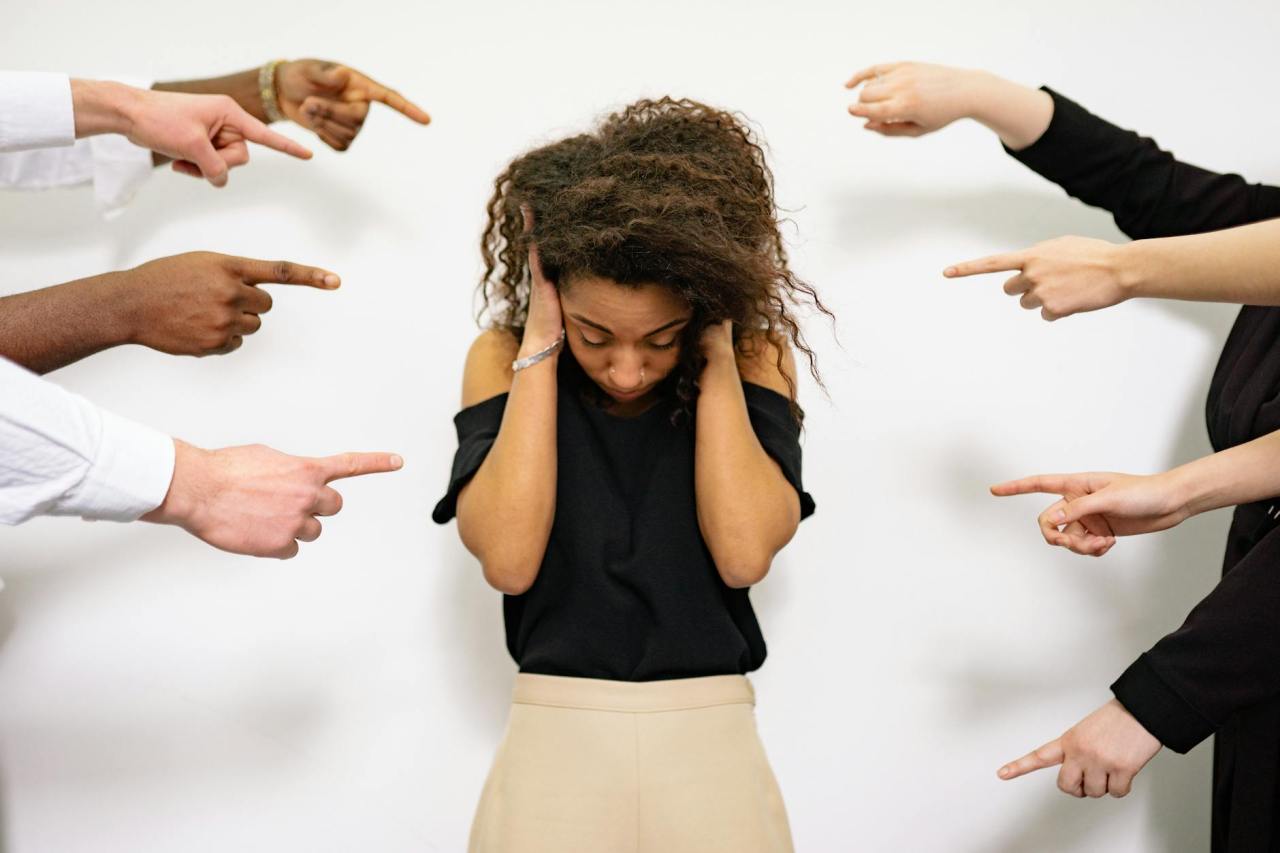
See, when you tell people you’re a writer, critics often come out of the woodwork like cockroaches. They want to know when and where you’ve been published and how much you’ve earned. They make assumptions about your output, about how easily they could do what you’re doing if only they had your time or resources or set-up. They apply their own calculus to evaluating your worth, whether the effort you’ve expended would have been better spent on more practical (or lucrative) endeavors, and find you sorely lacking in comparison to what they would have done.
At least, that’s been an unfortunate part of my experience.
The problem, of course, with such criticisms is that they are destructive rather than constructive. Creating and building are always more difficult and time-consuming than tearing things down. Just ask any construction worker or bully. You don’t have to finesse a wrecking ball.
And sometimes, unfortunately, we’re our own wrecking balls. We sabotage ourselves. We have these wonderful ideas, wonderful dreams, and yet… We can’t bring them to life. The fault, therefore, must be within us. We aren’t good enough. Talented enough. Accomplished enough. The universe has given us a sign, it was not meant to be–and so we quit.
Which is okay, I suppose. If that’s what you want. If that makes you happy. If quitting the thing that isn’t working leads you to the thing that does. You are, after all, the boss of your own story. You can decide what to do and how to do it, but…
What if you DON’T know either of those things? What if you know you don’t want to quit but you’re stuck and can’t see your way forward?
That’s when you call in reinforcements. That’s why I share my work, whenever I can, during Critique Week. Because I might be the boss, but I’m not a be-all, end-all, know-all expert. I need help, perspectives besides my own, objectivity. My critique cohort needs that from me, too.
Putting yourself out there, however, asking for help and trusting others to provide it? That can be daunting. True story: I’ve had some lousy experiences with critique groups pre-Superstars, and fellow writers, unfortunately, can be the worst kinds of critics. Not so, those I’ve met through StoryADay. As I shared here last month, I was both excited and nervous to submit chapters from my novel, but not worried, because their feedback is consistently helpful and encouraging. I finished the week eager to write, eager to continue the story. And I have been, every day since.
See, no one in the group ever says, You don’t belong here. You should shut up, throw this away. Quit.
Instead, they recognize that, while we all have stories we want to tell, we don’t all have the same needs or goals or preferences. Except, we all want someone to listen. Respectfully, seriously, and with open minds. We want cheerleaders, yes, but not false praise. We all want to be the boss of our own stories. Absolutely. However, none of us want to be Anderson’s Emperor or his tailor. Those two evil-doers are the real imposters.
That’s a good philosophy for life, too, I think.
*****
SPEAKING OF STORYADAY…
The demise of NaNoWriMo has left some writers wondering how to flex their creative muscles this November, and StoryADay May is rising to the challenge (ha! ha!) with its November reboot. Check out all the details HERE and sign up to receive a story prompt each day throughout the month.
WHAT I’M READING NOW…
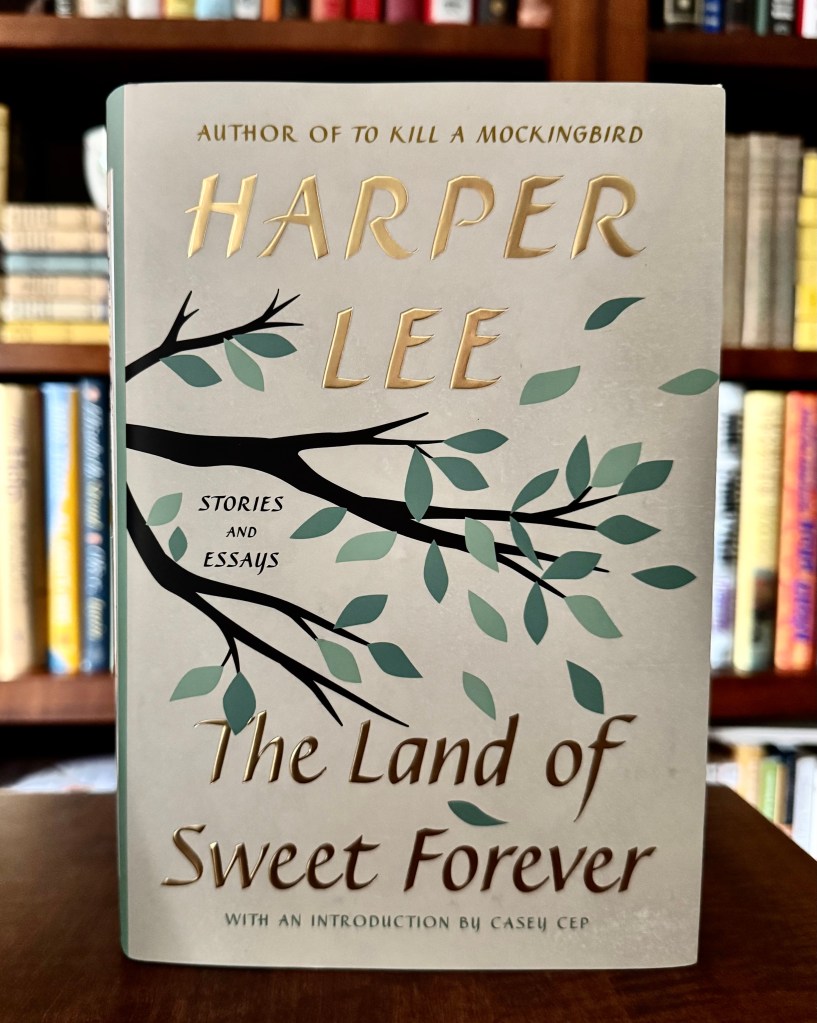
To Kill a Mockingbird is one of my all-time, absolute favorite books EVER, to read and to teach, so OF COURSE I had to pick up a copy of this collection as soon as it was released.
WHAT I’M READING NEXT…
Something from my library pile. I added all three titles to my TBR list earlier this year and lucked out that all three were available on a recent visit.

RECENT READS AND RECOMMENDATIONS…
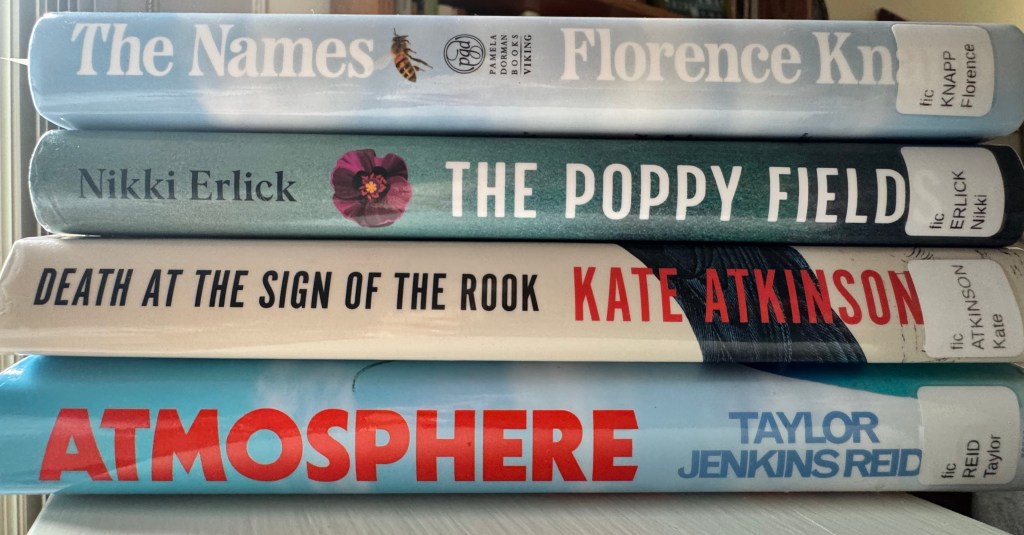
I’m a huge fan of well-written books that make me think and make me care. Bonus points if they stick their endings. Of the four above, only The Names accomplished all of that and was therefore my favorite. I didn’t buy the premise or character motivation of The Poppy Fields. Death at the Sign of the Rook lacked sufficient cohesion for my liking, and I figured out the ending of Atmosphere by the end of the first chapter.

Beatriz Williams is one of my go-tos when I just want a good, entertaining read, and Our Woman in Moscow did not disappoint. That said, its title telegraphs its ending a little too obviously.
I love Joan Didion and have been looking forward to reading the posthumous Notes to John. However, I DNF after about thirty pages because the subject matter was so personal I felt uncomfortably voyeuristic.
I almost DNF Good Material because the protagonist Andy seemed so whiny and immature, the tropes predictable and ho-hum. Let’s just say it got better and I’m glad I stuck with it.
Also,
Britt-Marie Was Here by Fredrik Backman, which was a recent pick for my online book club. Britt-Marie made an appearance in an earlier Backman I’d read, so I had a suspicion about how her story would unfold. There were some nice surprises, but I wasn’t wrong.
Mrs. Lincoln’s Dressmaker by Jennifer Chiaverini. I recently joined a local in-person book club and this was the first title. While it read more like non-fiction than fiction, I appreciated the author’s meticulous depiction of seamstress and former slave Elizabeth Hobbs Keckley and her contributions to American history.
I Am Not Sidney Poitier by Percival Everett, a reread. I rushed through the first time, missed most of its subtlety, and was underwhelmed by its satire. Not so the second read. Everett is, quite frankly, brilliant.
Katabasis by R.F. Kuang. This wasn’t quite the rollicking romp through Hell the book jacket suggests it is. It’s quite a bit darker and more esoteric than I anticipated, but I enjoyed the dynamic between Alice and Peter as they teamed up on their dangerous and unusual quest.
When the Cranes Fly South by Lisa Ridzen. Two thumbs way up. Bo’s story isn’t merely about his dying but about his living, and while the plot is relatively simple and straightforward, in Ridzen’s compassionate and insightful telling it becomes extraordinary.
The Woman in Cabin 10 by Ruth Ware. I heard the buzz about the movie and wanted to read the book first. I ALWAYS read the book first, excepting Forrest Gump because somehow I missed the memo.
WHAT I RECENTLY ADDED TO MY TBR SHELF…
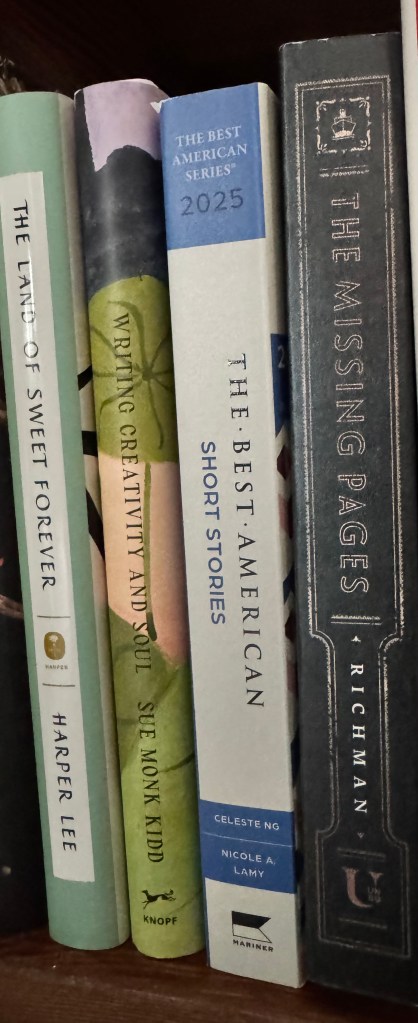
Popped into a local indie bookshop for The Land of Sweet Forever and somehow ended up with three more. No clue how that happened, no clue at all!! 😂
COMING UP NEXT ON MY NAME WAS SUPPOSED TO BE ELIZABETH ANN…
I’m working on a few different ideas and haven’t quite figured out which one to queue up next. Stop back next month and let’s both be surprised.
Now You Tell Me…
What piece of advice helps you ignore the naysayers? How do you battle your own version of imposter syndrome? I’d love to hear the story!!
*****
Thanks for reading! Thanks for sharing!
Discover more from My Name was Supposed to be Elizabeth Ann
Subscribe to get the latest posts sent to your email.
 My Name was Supposed to be Elizabeth Ann
I was disappointed that I didn’t take part in Critique Week this time around. It is one of my favorite things even though it fills me worry! I mean, like you said, it always goes well. SuperStars are amazingly helpful. Nearly everything I’ve ever had published went through Critique Week. Yet, I still go through the I’m-not-smart-enough-not -talented-enough-not-attractive-enough to be successful. I have irrational thoughts! But I plow ahead, writing and submitting anyway. StoryADay and SuperStars keep me going, and that is no exaggeration. I generally imagine how I’d feel if in the furute my son says, “Mom wanted to be a writer but gave up,” and this is so horrifying to me, I keep on. Sometimes I feel foolish, but I keep on. It’s what I want to do with my entire soul even if no one wants to read what I write.
LikeLiked by 1 person
That you continue to write and create despite such torment tells me that you are anything but foolish. I admire your vision and tenacity tremendously. I bet your son does, too ♥️
LikeLike